Wednesday, 28 September 2011

Weeders' Weekly - Sharing Produce

I know I'm often grumbling (humorously, I hope) about either having no produce from the garden, or too much, but what I really love is having stuff to share. The main advantage is that I don't then feel bad about wasting fruit or marrows, but sometimes it works as a swap and I get something different in return - which is great

For example, I've given away blackcurrants and got blackcurrant jam back


I've taken a picnic of bread, cheese, wine and beer to a friend's allotment and come home with broad beans, redcurrants and tay berries (oh, and empty bottles)


And the other friend who came and did map reading and weeding and picking made redcurrant jelly from the allotment friend's fruit and gave me a jar of that (photo above)

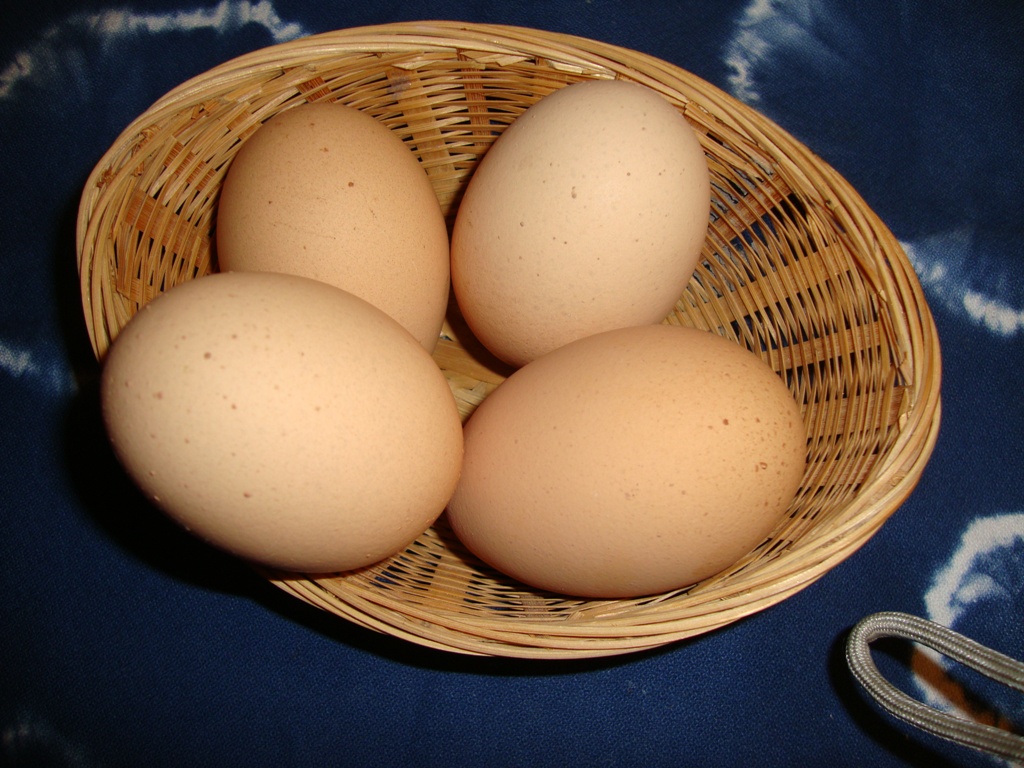
I've been given eggs from my friend's chickens (thank you Runnerbean and Chickpea) in return for plums


And a beautifully presented grapefruit (ok, it's cheating a bit - he grew it on his organic fruit farm in Majorca) in return for a jar of home made chutney


And he gave me some almonds


But back to local stuff. Quinces have come back to me transformed into pickle and a delicious thing with almonds and cardamon (no photo available - it's eaten within hours of entering the house)


Quinces are wonderful - I'll do a whole blog post about them shortly, but first I must write that letter about the Brent libraries

Yes, marrows, nearly forgot. I'm not a big marrow fan - I prefer to catch them at the courgette stage. A modest marrow is lurking back right in this basket next to some lovely courgettes. But I have a friend who loves marrows and she has offered an apple cake in return whenever it's needed. Marrows are quite good in a homemade vegetable curry (along with runner beans which also got too big - pre-steamed a bit first)

Monday, 19 September 2011

Down Salusbury Road... and Libraries

But before we stroll down Salusbury Road for various surreal sights a quick word on the Save our Six Libraries Campaign. You'll remember that we're waiting for Mr Justice Ouseley's judgment when the new legal term begins on 3rd October ... well, it's still very important to write to Jeremy Hunt, Secretary of State for Culture. Don't put this off - the more letters he gets the better.
Margaret Bailey explains "This is urgent. He and his officials at the Department for Culture Media and Sport will be taking a decision very soon on whether Brent’s cuts would put them in breach of the 1964 Museums and Libraries Act. He has met with representatives of Brent to discuss the issue but not with resident or campaign groups, and we have contacted them to ask for a meeting. So the more lobbying he gets the better".
For the address and a template letter

The Campaign needs to raise £30,000 as a "community contribution" towards the legal costs (in case our claim fails). This is because there would be a benefit not just to the actual named claimants (who are legally aided), but also to the communities surrounding the 6 threatened libraries if our claim succeeds. I know this sounds complicated, but don't let that put you off! A week ago the total was just under £22,000, which is fantastic, but, as Margaret Bailey says "So if you’re feeling bad about not having donated a fiver towards saving libraries in the borough, now’s your chance..."

To find out how to donate that fiver

To read about the court hearings
Read about Day 1
Read about Day 2
And about Day 3

Ok, where were we? Salusbury Road... on September 13th

At first I thought this was a run over hedgehog ...

In the window of this shop ...

This poster ...
Play's great, by the way, if you missed it at the Tricycle, you can see it at the Vaudeville Theatre until 10th December

Free teas or art installation or someone who couldn't reach the bin?


Healthy van

Saturday, 10 September 2011

September Harvest

Finally there's lots of produce in the garden - the last of the plums and berries (brambles and mulberries), apples, pears, beans, courgettes, chard, edible leaves and flowers - mainly nasturtiums, cucumbers and very few tomatoes


Pears, mulberries and mirabelle plums in the basket. Mulberries ripen gradually so they have a fairly long picking season which is handy. They also have a great flavour. Only drawback is they are spectacularly messy to pick - some of the berries unpredictably squirt juice when you touch them, just the colour of blood, which makes for a gory looking harvest. Essential to wear purple or black clothing (or to pick them on National Naked Gardening Day)


A great crop of chard thanks to all the rain. The ruby chard looks great but its stalks aren't as good to eat as the white chard. They're more like spinach stalks, whereas the white chard stalks (ribs, I think they're called) are a vegetable in their own right (particularly using Anna Thomas' recipe for cooking white beans with chard, sage, garlic and olive oil). The purple flower is a morning glory self seeded among the chard.


Ordinary runner beans and purple climbing beans. The purple beans also have the lovely purple flowers and less foliage than runner beans. The only disappointing thing is that when you cook them they go green and the cooking water goes an amazing colour instead. I think they're a type of climbing French bean - known in my family as Uncle Ernest's beans- they live on after him grown by me and several cousins in Yorkshire and Sussex.


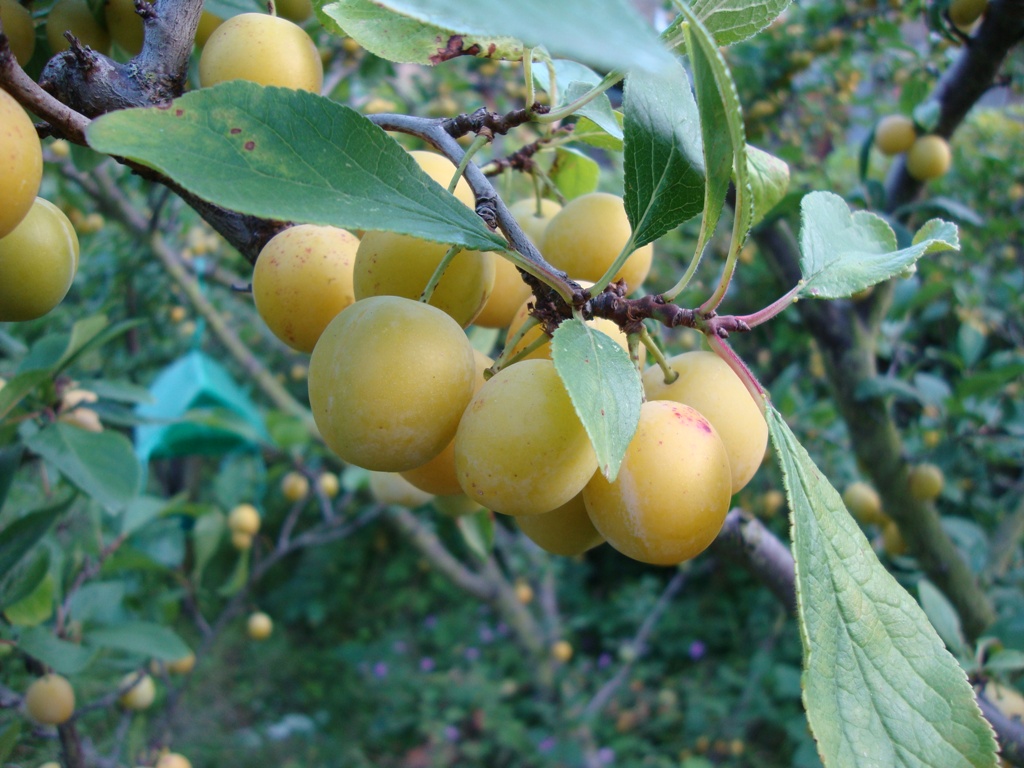
The small yellow plums are mirabelles. Last year the total crop was about 20 fruit because of a frost at just the wrong time when the blossom was setting into fruit (altho Orlin at the Farmers' Market told me that just lighting a few nightlights under the tree can raise the temperature enough to prevent frost damage! Proper fruit farmers like Orlin are roused from their beds by an alarm if the temperature drops dangerously low and they have to rush out and warm up the air around their trees).

Lots of people have also found them growing wild (they come in red and yellow). Michael Stuart and the Local Fruit Harvesters picked a massive amount from a tree in Streatley Gardens in late July. They're very good raw and also make a delicious jam but it's a bit of a bore de-stoning them - either at the start by cutting them in half and taking the stone out, or by cooking them to loosen the stones then plunging your hands in and hunting around for the stones, then adding sugar and finishing off the jam.

The other great thing about them was that they were entirely free of the unwelcome plum maggot which was in nearly all my Victoria plums this year. I used grease bands over the winter (to stop the flightless moths crawling up the trees in the first place) and pheremone traps in the summer to catch moths on the wing, but neither of these organic methods helped at all this year. I've tried to be more thorough about collecting up fallen fruit after realising (after all these years!) that leaving the maggot to exit the plum, pupate and hatch as yet another moth was not helping the situation. A friend in Majorca claims that there is a local bird especially adapted to removing these maggots from plums with a perfectly shaped beak, but I don't think we have that useful feathered friend here.


Beautiful peacock butterfly on the brambles (in open and shut positions).

Thursday, 11 August 2011

Biodynamic seeds from one incredible community

Libraries latest - Stop press
Mr. Justice Ouseley will not give judgment until the new legal term in October. There was an outside chance that he might have been able to say by Friday 12th August whether the application had been succesful. This is the better course anyway as we don't want a rushed decision. Ann John, Brent Council's labour leader is quoted (from her parallel universe) in the Kilburn Times as saying that
"the delay to the decision means uncertainty for members of staff. It is painful for them. This is a landmark case and the judge has to get it right. We will just have to be patient"
Of course it's Brent's own behaviour which has caused distress to library staff! Read the response of Graham Durham of the Save Cricklewood Library Campaign.

Back to the Biodynamic seeds
It was a chance remark by friends in Shropshire which inspired me to go to Botton village in the North Yorkshire Moors recently (although I grew up in York I'd never heard of it before). It is the most incredible community and the reason for writing about it on this local blog is that it produces an enormous range of biodynamic seeds under the name Stormy Hall Seeds.

At Botton village fields of orange, yellow and purple stripes turn out on closer inspection to be the longest rows of marigolds, yarrow and lavender  I've ever seen- and beyond the fields the stunning backdrop of the North Yorkshire moors. I know, I know, it was July - it would be a different story in the winter.


There's also a beautiful enclosed garden buzzing with bees and an incredible variety of flowers


But the most incredible thing about Botton Village is that it is run by the Camphill Village Trust as a home and workplace for around 270 people, about half of whom have learning disabilities and other special needs.  Everyone contributes what they can to the community, whether it's picking blackcurrants (when I visited), working in the greenhouse, making jam, working in the on-site bakery or toy workshop or wood working shop or weaving workshop.  There's also an organic dairy herd (and a creamery where milk, yoghourt and cheese are made), hens (free range of course) and a print shop, and a Steiner school, two shops and a cafe - which are also used by people not living in the community.


The Camphill Village Trust first bought Botton Hall (in Danby Dale in the North Yorkshire moors), and its immediate farms and land in 1955, and since then more buildings have been added - including a community hall and a church - so that there are now almost 40 households.  The residents with disabilities are supported in their daily lives by co-workers in accordance with Rudolph Steiner's beliefs.  The whole place has a great atmosphere and everyone I met was keen to tell me what they were doing.

It's also a great example of a reverse of the rural depopulation trend - unprofitable farms have provided the housing for a large number of people who are all occupied in the community.  Sorry, I've gone all Geography case study here, but it's true.


If you're anywhere near Pickering or Whitby in the North Yorkshire Moors go and see for yourself, and wherever you live have a look at their range of seeds.

These photos are from Botton village's own leaflets - aren't they great?


Related Posts Plugin for WordPress, Blogger...